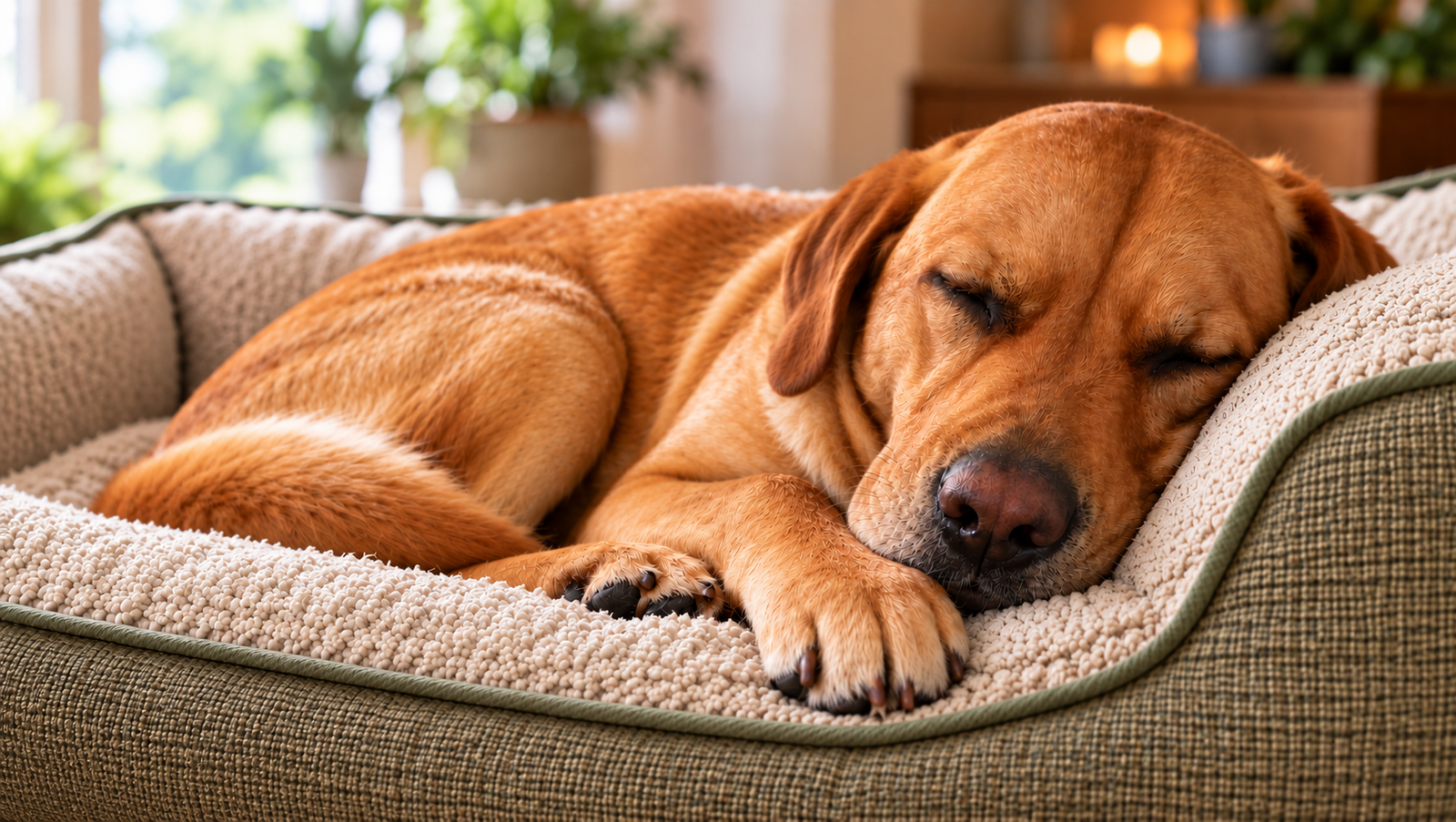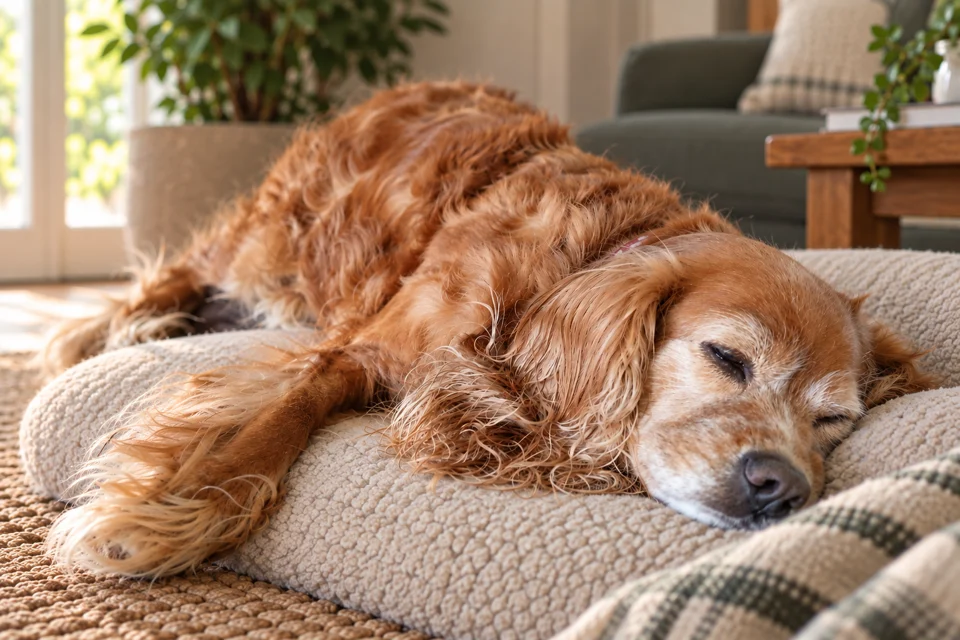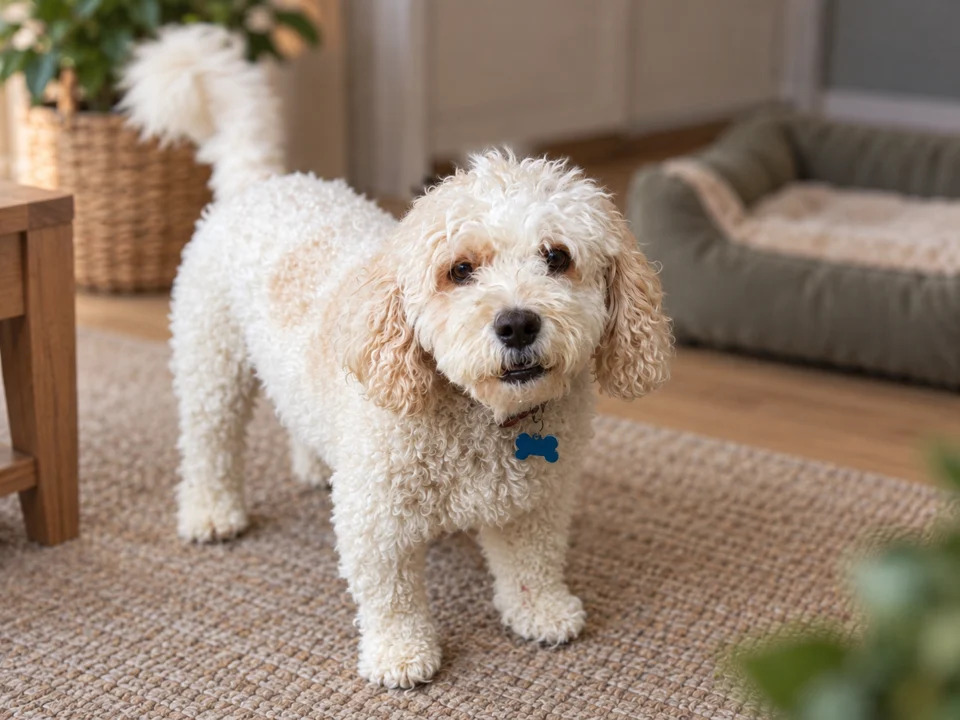
Some dogs come home with slightly muddy paws.
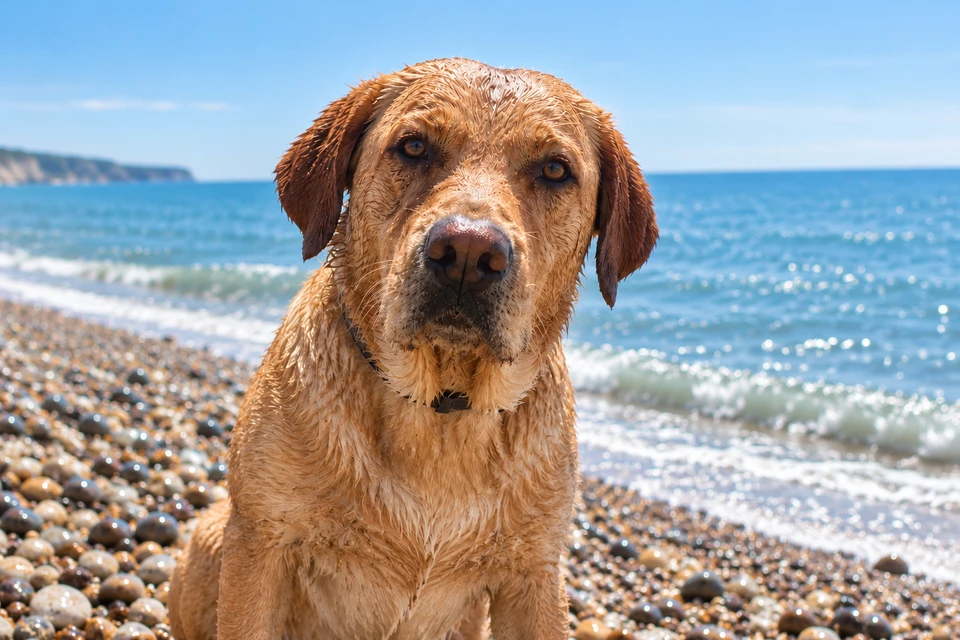
Others come home dripping wet, covered in mud and apparently delighted with themselves.
If your dog regularly swims, charges through puddles or spends a lot of time outdoors, choosing a bed that's easy to clean can make everyday life considerably easier. But waterproof, water-resistant, wipe-clean and washable don't all mean the same thing — and the most useful option depends on what you're actually trying to deal with.
Here's what we'd look at before choosing.
Waterproof and washable solve different problems
A washable dog bed is designed so that some or all of it can be washed, often by removing the outer cover and putting it in a washing machine.
A waterproof or water-resistant bed is trying to stop, or reduce, moisture getting into the fabric or filling in the first place.
Those are different jobs.
A removable washable cover might be perfectly practical for a dog that occasionally comes home muddy. If your dog is wet several times a week, however, constantly removing, washing and drying a cover may become less convenient.
Equally, a wipe-clean or water-resistant surface can make everyday cleaning easier, but that doesn't automatically mean every part of the bed is waterproof or that the entire thing can simply be left outside or hosed down.
The useful question isn't which description sounds better?
It's what do you actually need the bed to cope with?
Start with what your dog actually needs
Think about an ordinary week.
Does your dog mainly sleep indoors and occasionally arrive home with dirty paws?
Do they swim regularly?
Are they the sort of dog that finds the only muddy patch in an otherwise dry field?
Do they work outdoors or spend a significant amount of time outside?
And when they do come home filthy, what would you realistically prefer to do with their bed?
For an occasionally muddy dog, a removable machine-washable cover may be all you need.
For a dog that's routinely wet and dirty, being able to wipe or hose down the bed — where the manufacturer specifically says it can be cleaned that way — could be considerably more convenient.
Neither construction is automatically better. They're useful in different circumstances.
What does "waterproof" actually refer to?
This is worth checking because a dog bed is made from more than one component.
A product might have a water-resistant outer fabric, a protective inner cover around the mattress, a coated fabric, or some combination of these.
And there is an important technical distinction between water beading on the surface of a fabric and water actually penetrating through it.
Textile testing reflects that distinction. A spray test standard measures a fabric's resistance to surface wetting, and specifically notes that it does not measure water penetration through the fabric [1]. A separate standard uses hydrostatic pressure to measure a fabric's resistance to water actually penetrating it [2].
You don't need to become a textile engineer to buy a dog bed.
But it does mean that when you see waterproof, water-resistant or water-repellent, it's worth looking a little further.
Useful questions include:
- What part of the bed is being described?
- Is it the outer fabric, an inner liner or both?
- Are the seams constructed to resist water too?
- What does the manufacturer actually say the bed can withstand?
- How does the manufacturer recommend cleaning it?
A clear product description should make those answers reasonably easy to find.
A water-resistant inner cover can be particularly useful
There's another feature worth looking for on beds with a separate mattress or cushion: protection underneath the decorative outer cover.
If the outer cover becomes wet, an additional protective inner cover can help reduce the amount of moisture reaching the mattress or filling underneath.
That's useful for a different reason from having an easily washable outer cover.
One makes cleaning the surface easier; the other helps protect what's inside.
A bed can therefore combine several practical features rather than being simply "waterproof" or "not waterproof".
Removable covers: check what can actually be washed
"Washable" is another description worth looking beyond.
Does it mean:
the whole bed is washable, or just the cover?
If it's the cover, can all of the covers be removed or only the main sleeping surface?
What temperature can they be washed at?
Can they be tumble dried?
How long are they likely to take to air dry?
Can replacement covers be bought separately?
For a dog that gets dirty frequently, those details may matter considerably more in everyday life than the word washable on its own.
Always follow the care instructions for the particular bed. Different fabrics, coatings, foams and fillings can require very different treatment.
What about wipe-clean and hoseable beds?
For particularly muddy dogs, a surface designed to be wiped clean can be appealing because you may not need to dismantle the bed every time it gets dirty.
Some manufacturers go further and specifically state that particular beds can be hosed down or pressure washed under specified conditions.
If that's important to you, check the instructions carefully.
Don't assume that a bed described as waterproof can automatically be pressure washed, soaked or left outdoors. Those are separate claims and should come from the manufacturer.
The same applies to drying. Follow the instructions for the actual product rather than assuming that a waterproof-looking material can be treated in a particular way.
Water-repellent treatments aren't necessarily permanent
Some fabrics achieve their surface water repellency through a treatment or coating.
Those treatments shouldn't automatically be assumed to perform identically forever.
The principle is well established in technical outdoor fabrics: durable water-repellent treatments can lose performance through wear, dirt and other contamination, while the underlying waterproof construction can remain a separate feature [3].
That doesn't tell us how any particular dog bed will age — the manufacturer should provide that information for its own product — but it is another reason not to treat "water-repellent" and "waterproof" as interchangeable descriptions.
If a bed relies on a coating or treatment, it's reasonable to ask what care it needs and whether its performance changes with use or washing.
Don't forget the rest of the bed
Easy cleaning matters, but it isn't the only consideration.
A dog still needs enough usable space to rest comfortably. A high-sided bed may have considerably less sleeping space than its external dimensions suggest.
Think about access too. High sides may suit some dogs perfectly well, while another dog may find a lower entrance easier to use.
And look at what's inside.
A practical outer fabric doesn't tell you anything about the mattress or filling underneath it, just as a supportive mattress doesn't tell you whether its cover will cope particularly well with a soaking-wet Labrador.
The whole construction matters.
Waterproof or washable: which would we choose?
There isn't one answer for every dog.
For a predominantly indoor dog that gets muddy occasionally, we'd probably place considerable value on an easily removable, machine-washable cover.
For a dog that regularly comes home wet or very muddy, we'd pay much closer attention to whether the surface can be wiped or hosed clean, how well the inside of the bed is protected from moisture, and how straightforward the whole thing is to dry.
And for plenty of households, the most useful bed may combine both approaches: protection from moisture alongside removable, washable components.
The important thing is understanding what each feature actually does.
What we'd check before buying
Before choosing a bed for a wet or muddy dog, we'd want to know:
- What are the outer and inner materials?
- Which parts are waterproof, water-resistant or water-repellent?
- Is there a protective inner cover around the mattress or filling?
- Which covers are removable?
- What can be machine washed?
- Can the bed be wiped or hosed down?
- What are the drying instructions?
- Are replacement covers or cushions available?
- What are the external and usable internal dimensions?
- How is the mattress or base constructed?
You might not need every one of those features.
But knowing the answers makes it much easier to work out whether the bed fits your dog and your routine.
The Proper Pet Space approach
We don't think every dog needs a waterproof bed, just as we don't think every dog needs the same type of mattress.
For a dog that spends half its life finding water and mud, cleanability might be one of the most important considerations. For another household, a removable washable cover may be more than enough.
So when we look at beds designed for wet and muddy dogs, we'll look beyond the headline description at what can actually be cleaned, how moisture is managed, what's underneath the cover and how practical the bed is to live with.
Because the most useful feature isn't necessarily the one that sounds most impressive.
It's the one that makes sense for the way your dog actually lives.
Compare cleaning options in our collection
For wipe-clean care, explore the P&L Waterproof Dog Bed. P&L permits rinsing it under a tap or hose, following its cleaning instructions.
For a soft fleece lining and machine washing, explore the P&L Fleece-Lined Oval Dog Bed. Follow the care label for wash settings.
Compare the materials, care instructions and internal dimensions before choosing.
Sources
[1] ISO. ISO 4920:2012, Textile fabrics — Determination of resistance to surface wetting (spray test). iso.org/standard/50706.html
[2] ISO. ISO 811:2018, Textiles — Determination of resistance to water penetration — Hydrostatic pressure test. iso.org/standard/65149.html
[3] GORE-TEX Brand. Frequently Asked Questions — durable water-repellent (DWR) treatment performance and care. gore-tex.com/en_uk/support/frequently-asked-questions